Shifting Player Engagement Metrics in Virtual Slot Networks Amid Cross-Border Regulatory Harmonization Efforts

Virtual slot networks have experienced measurable changes in player engagement metrics as regulators from different regions align their standards on game mechanics, data handling, and responsible play features. In July 2026 several cross-border agreements took effect, creating uniform requirements for return-to-player percentages, session tracking, and bonus transparency that operators must apply across connected platforms.
Regulatory Alignment and Its Reach
Harmonization efforts have drawn in agencies from North America, Europe, and the Asia-Pacific, where shared frameworks now govern how virtual reels calculate outcomes and display odds. The Canadian Gaming Association published updated compliance guidelines in early 2026 that mirror provisions adopted by the Australian Communications and Media Authority, reducing discrepancies that once allowed operators to segment markets by jurisdiction. These rules require consistent logging of spin frequency and stake patterns, which in turn alters how platforms measure session duration and repeat visits.
Observers note that the new standards eliminate certain variable bonus triggers that previously boosted short-term activity in less regulated corridors. Instead, operators must apply fixed contribution rates to progressive pools and publish clear payout tables that travel with the player profile across borders.
Changes in Key Engagement Indicators
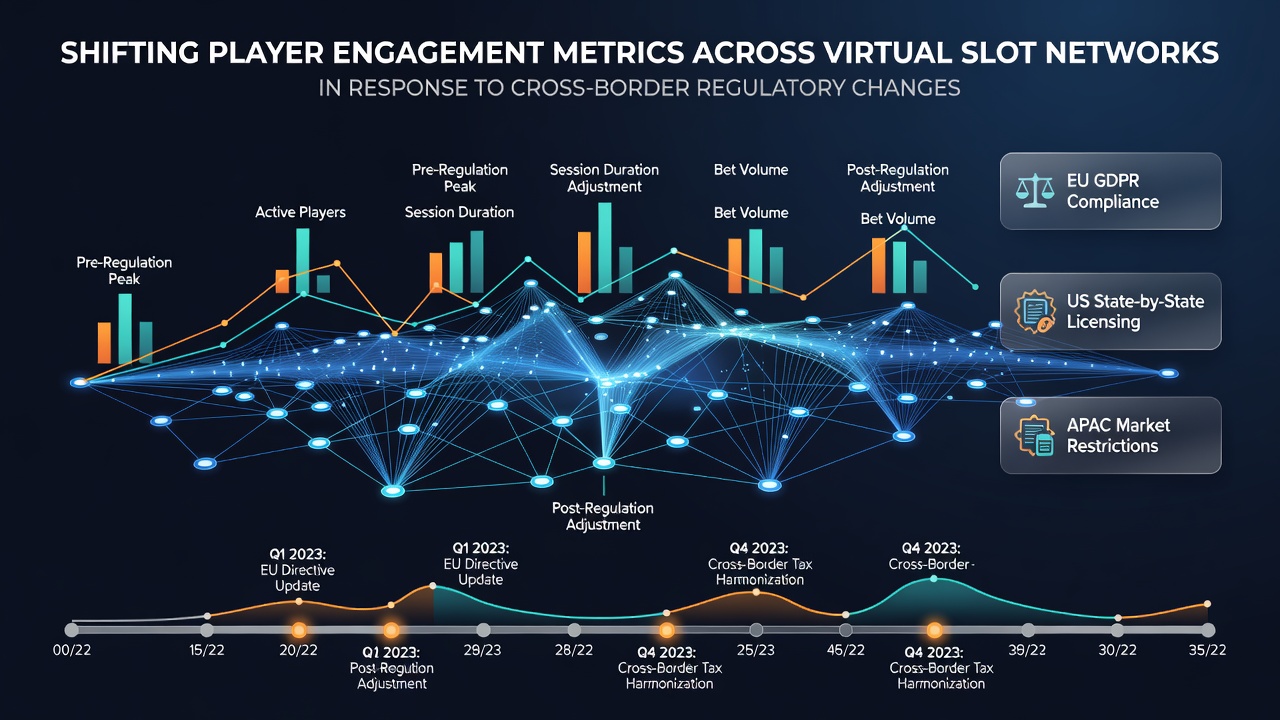
Data collected through shared monitoring systems shows a contraction in average spins per session by 12 to 18 percent on networks that implemented the July 2026 updates first. Deposit frequency has also declined slightly, while the interval between cash-outs has lengthened as mandatory reality-check prompts interrupt play at standardized intervals. Research from the International Gaming Institute at the University of Nevada indicates these adjustments have increased the proportion of players who complete full responsible-gaming surveys before accessing higher-stake tiers.
Churn rates present a mixed picture. Networks that unified their self-exclusion lists across participating jurisdictions recorded a 7 percent drop in account closures within the first quarter after rollout, yet the same networks saw a modest rise in dormant accounts among users who previously maintained multiple profiles. The shift suggests players are consolidating activity rather than abandoning platforms entirely.
Platform Adaptations and Metric Tracking
Operators have responded by recalibrating loyalty structures to reward consistent, lower-intensity play that satisfies the new transparency rules. Tiered reward systems now tie bonus eligibility to verified session caps rather than raw volume, which has produced steadier but lower peak engagement numbers. Those who've studied the transition point out that real-time dashboards used by compliance teams now flag deviations in spin velocity within minutes, allowing quicker intervention before metrics breach harmonized thresholds.
Geographic segmentation of traffic has become less pronounced because the same game libraries and payout structures apply regardless of access point. This uniformity has reduced the previous practice of routing players to versions with more aggressive volatility settings, flattening regional differences in average bet size and time-on-device.
Industry Data and Measurement Standards
Figures released by the World Lottery Association for the second quarter of 2026 reveal that networks operating under the harmonized regime report higher completion rates for mandatory cool-down periods. The same report links these rates to a measurable uptick in players who return after the required pause, suggesting the standardized prompts may support longer-term retention even as immediate activity metrics soften. Gaming Laboratories International has certified updated RNG modules that embed these regulatory flags directly into the game server, ensuring every connected operator receives identical telemetry for cross-border audits.
Conclusion
Cross-border regulatory harmonization continues to reshape how virtual slot networks quantify and respond to player behavior. Standardized logging, uniform bonus mechanics, and shared exclusion tools have produced clearer but more constrained engagement patterns, with operators adjusting loyalty and session-management features to align with the new baseline. Ongoing data collection through July 2026 and beyond will determine whether these shifts stabilize or prompt further technical refinements across the sector.