Reward Timing Patterns and Their Correlation with Retention Rates in Worldwide Digital Gaming Ecosystems
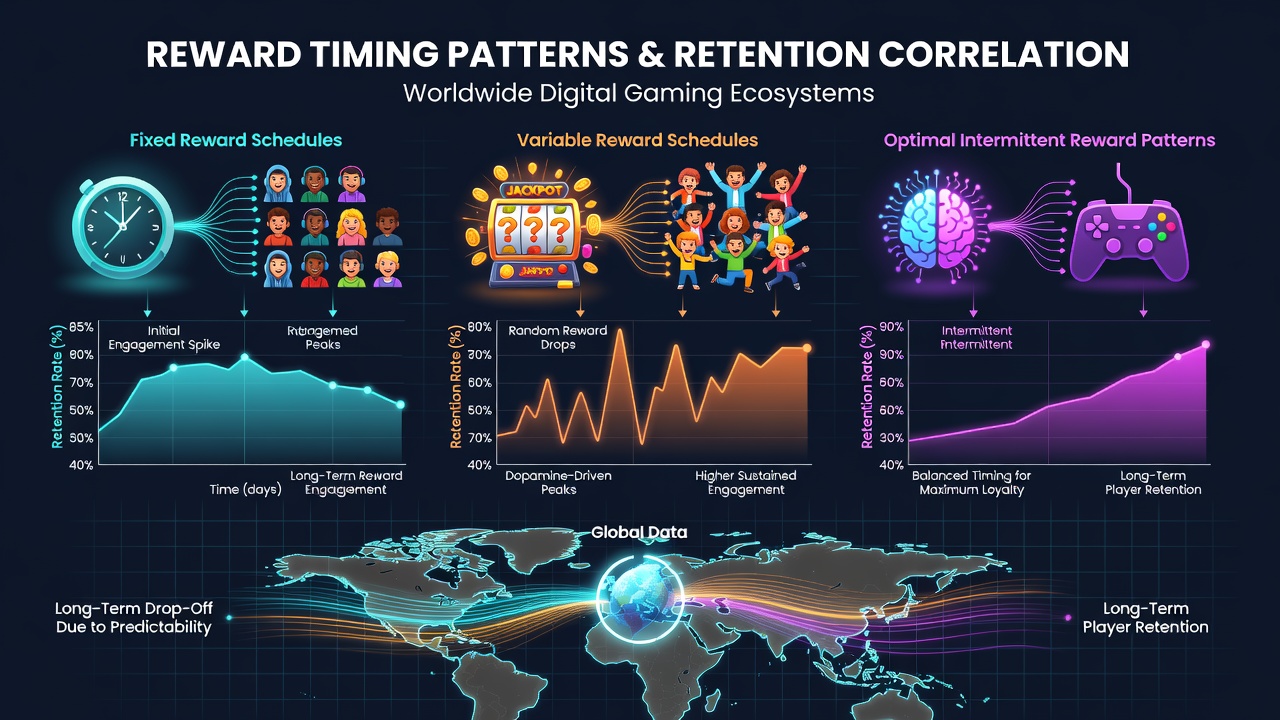
Digital gaming ecosystems span mobile titles, console networks, and browser-based platforms where reward timing directly influences how long players stay engaged, and data from multiple regions shows clear correlations between when rewards appear and overall retention metrics. Researchers tracking user behavior across thousands of titles have documented that immediate rewards such as daily login bonuses or quick achievement unlocks tend to boost short-term returns while staggered reward schedules support longer play cycles in many cases.
Global Patterns in Reward Delivery
Studies conducted in North America, Europe, and Asia-Pacific markets reveal that games delivering micro-rewards within the first five minutes of a session see higher day-one retention compared to those with delayed gratification mechanics, yet titles using progressive reward ladders maintain stronger month-over-month activity when rewards scale in complexity over time. Data from the Entertainment Software Association indicates that North American developers increasingly test variable reward intervals to match regional player preferences, while Australian Interactive Games Association reports highlight similar testing in mobile ecosystems where loot distribution timing affects weekly active user counts.
Observers note that fixed reward schedules, such as every-24-hour energy refills, create predictable return patterns in casual games whereas randomized timing in competitive titles often extends session lengths because players remain uncertain about when the next benefit arrives. In July 2026, industry reports continue to track these distinctions across live-service titles where retention curves flatten or rise based on how developers space out battle-pass milestones and event-based payouts.
Regional Data and Retention Metrics
European markets show stronger retention when reward timing aligns with evening peak hours, according to aggregated telemetry from platform providers, while Asian mobile ecosystems demonstrate elevated stickiness when rewards appear immediately after tutorial completion. Canadian regulatory analyses of digital entertainment spending patterns further confirm that players exposed to tiered rewards spaced across multiple days exhibit lower churn rates than those receiving all benefits upfront.
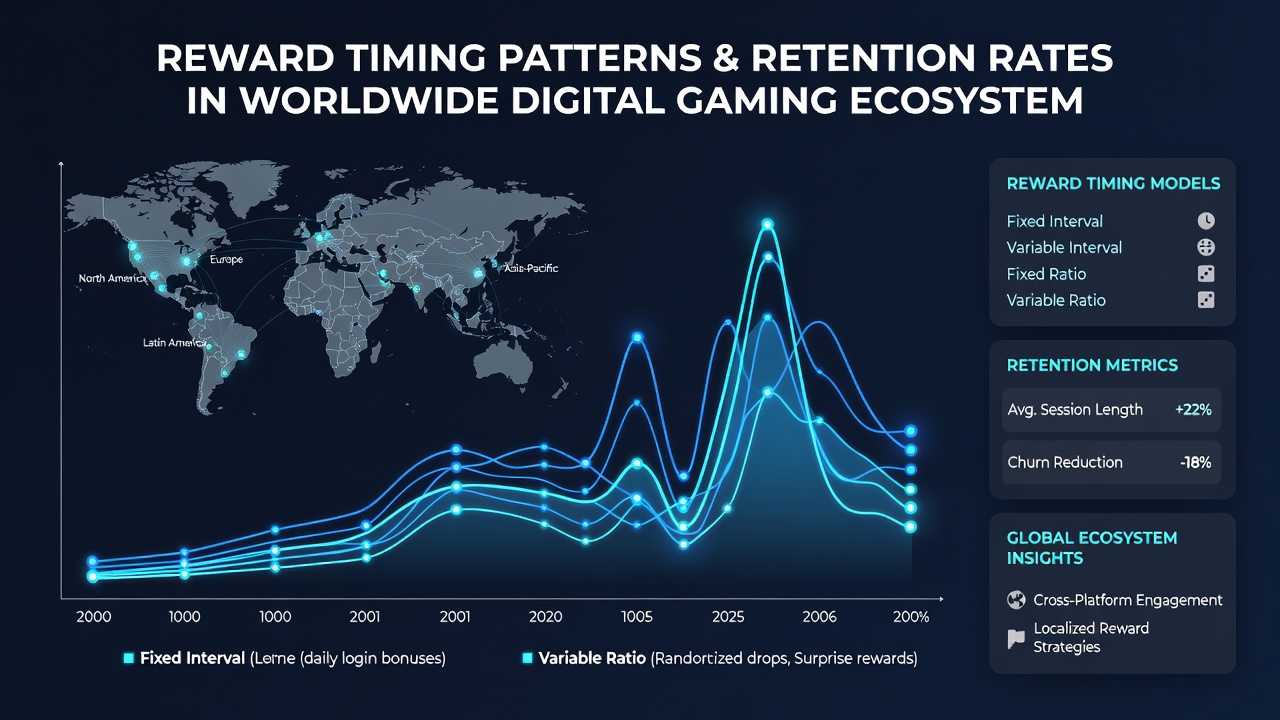
One study of over 200 mobile titles found that games using a mix of instant and delayed rewards retained 18 percent more users at the 30-day mark than those relying solely on instant gratification, and similar findings appear in console data where achievement timing influences continued play after initial downloads. These patterns hold across genres but vary by age group, with younger players responding more to rapid feedback loops and older cohorts showing steadier engagement under longer reward arcs.
Mechanics Behind Observed Correlations
Platform telemetry reveals that reward timing interacts with session length and social features, so games that place collaborative rewards at the end of weekly events often see group retention rise because players coordinate return times. Researchers have mapped these interactions through A/B testing frameworks where control groups receive standard reward pacing and experimental groups encounter altered intervals, yielding measurable shifts in return probability.
Academic papers from multiple universities document that dopamine response curves in players align closely with reward anticipation windows, which explains why unpredictable timing in some genres sustains engagement longer than fixed schedules. Game analytics teams now incorporate these findings when calibrating in-game economies, adjusting drop rates and notification triggers to match observed retention curves in different territories.
Implementation Trends Across Platforms
Live-service developers increasingly deploy dynamic reward timing that adapts to individual player data, shortening intervals for users showing early churn signals while extending gaps for highly active accounts. This approach appears in both free-to-play and premium titles, where backend systems monitor login frequency and adjust reward delivery accordingly without altering core gameplay loops.
Cross-platform titles face additional complexity because reward timing must account for device-specific session behaviors, and data indicates that mobile players respond differently to the same reward schedule than console users even within the same game. Industry groups continue to compile comparative benchmarks that help studios refine these systems across global audiences.
Conclusion
Reward timing patterns continue to shape retention outcomes across worldwide digital gaming ecosystems as developers refine delivery schedules based on regional data and platform-specific behaviors. Ongoing analyses in 2026 demonstrate that both immediate and staggered approaches contribute to measurable differences in player longevity when calibrated to audience characteristics and game design goals.