Navigating Multi-State Compliance Challenges for Players Accessing Interstate Casino Offerings via Mobile Devices
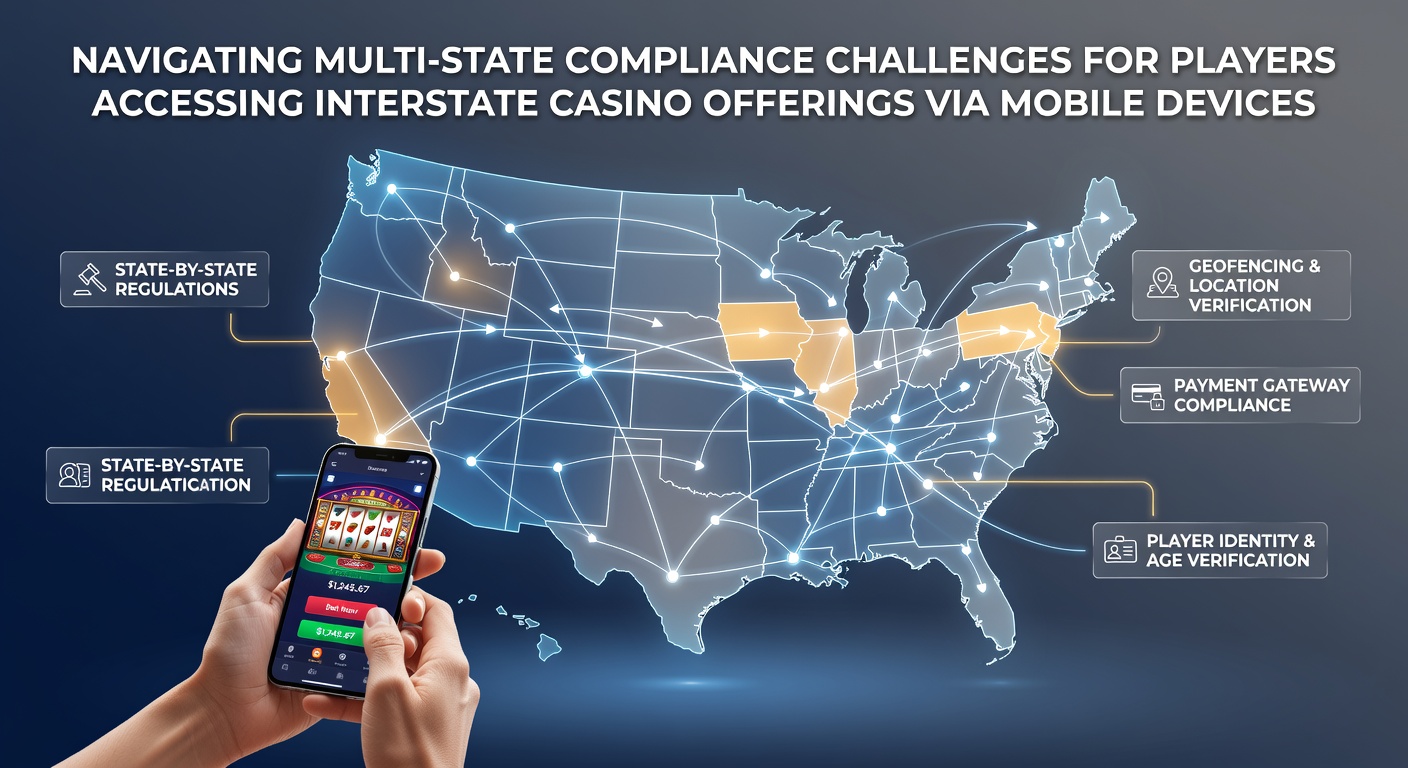 Players who access casino offerings across state lines through mobile devices encounter a patchwork of regulations that shift from one jurisdiction to the next, and operators must align their systems with each set of rules while users remain within permitted boundaries. Data from state gaming commissions show that mobile sessions now account for over 70 percent of all online gambling activity in regulated markets as of June 2026, which increases the pressure on location verification systems and cross-border transaction protocols.
State-by-State Regulatory Variations Shape Access Patterns
Each state maintains its own licensing framework, tax structure, and player protection standards, so an app that operates legally in New Jersey may trigger violations when a user crosses into Pennsylvania or New York without proper authorization. Observers note that the absence of a unified federal statute beyond the Unlawful Internet Gambling Enforcement Act leaves enforcement largely to individual state attorneys general and gaming control boards. Researchers at the University of Nevada, Las Vegas documented more than 40 distinct regulatory provisions that differ across just six active mobile gambling states in their 2025 report.
Payment processing adds another layer because some jurisdictions require in-state financial institutions while others permit national processors under strict reporting requirements. Those who study transaction flows indicate that mobile wallets must carry geolocation stamps that match the user’s declared address on file, and any mismatch prompts immediate account holds until verification clears.
Geo-Location Technology and Its Limitations
Operators deploy multiple overlapping location services including GPS, Wi-Fi triangulation, and IP address mapping to confirm that a player sits inside an approved state boundary at the moment of play. Studies conducted by the National Center for Responsible Gaming reveal that signal drift near state borders creates false positives in roughly 2.3 percent of sessions, prompting operators to implement buffer zones that suspend play within several miles of contested lines. Players often discover that airplane mode combined with cached data can bypass initial checks, which leads platforms to require periodic re-authentication during extended sessions.

Player Identification and Cross-State Record Keeping
Know-your-customer protocols now incorporate shared databases among participating states so that a self-exclusion entered in Michigan automatically flags the same individual in New Jersey and Pennsylvania systems. According to figures released by the Michigan Gaming Control Board, more than 18,000 players held active multi-state exclusion records by early 2026. Tax reporting follows similar lines because winnings above certain thresholds trigger automatic filings with both the player’s home state and the state where the wager occurred, creating duplicate paperwork that accountants must reconcile.
One compliance officer at a major operator described how mobile apps now embed state-specific terms of service that update automatically when the device detects a new location, and users must acknowledge the new set before play resumes. Failure to accept revised terms locks the account until the user returns to the original jurisdiction or completes supplemental verification steps.
Payment Routing and Anti-Money Laundering Controls
Interstate fund transfers must route through processors licensed in each relevant state, and the American Gaming Association reports that 14 states currently mandate separate trust accounts for player balances held across borders. Anti-money laundering algorithms flag patterns that suggest structured play across multiple platforms to obscure the origin of funds, and regulators in Colorado and West Virginia have increased audit frequency on such accounts since January 2026. Those who track enforcement actions find that mobile transactions receive heightened scrutiny because device identifiers can mask repeated attempts from the same physical location.
Enforcement Trends and Operator Responses
State regulators have begun sharing enforcement data through the Multi-State Internet Gaming Association, which allows rapid identification of accounts that attempt to circumvent geo-fences via VPNs or proxy servers. Penalties range from temporary account suspension to permanent bans and referral to federal authorities when patterns suggest organized evasion. Operators respond by deploying device fingerprinting that combines hardware IDs, operating system versions, and behavioral biometrics, which reduces successful circumvention attempts according to internal metrics shared at the 2026 Gaming Technology Summit.
Conclusion
The combination of state-specific licensing, advanced geo-location tools, shared exclusion lists, and coordinated tax reporting creates a compliance environment that requires constant technical updates and player cooperation. As mobile usage continues to expand through June 2026 and beyond, both operators and users must maintain awareness of shifting boundaries and verification requirements to remain within legal parameters across jurisdictions.