Mastering Bankroll Swings: Strategies for Thriving in Volatile Poker Cash Games
Mastering Bankroll Swings: Strategies for Thriving in Volatile Poker Cash Games
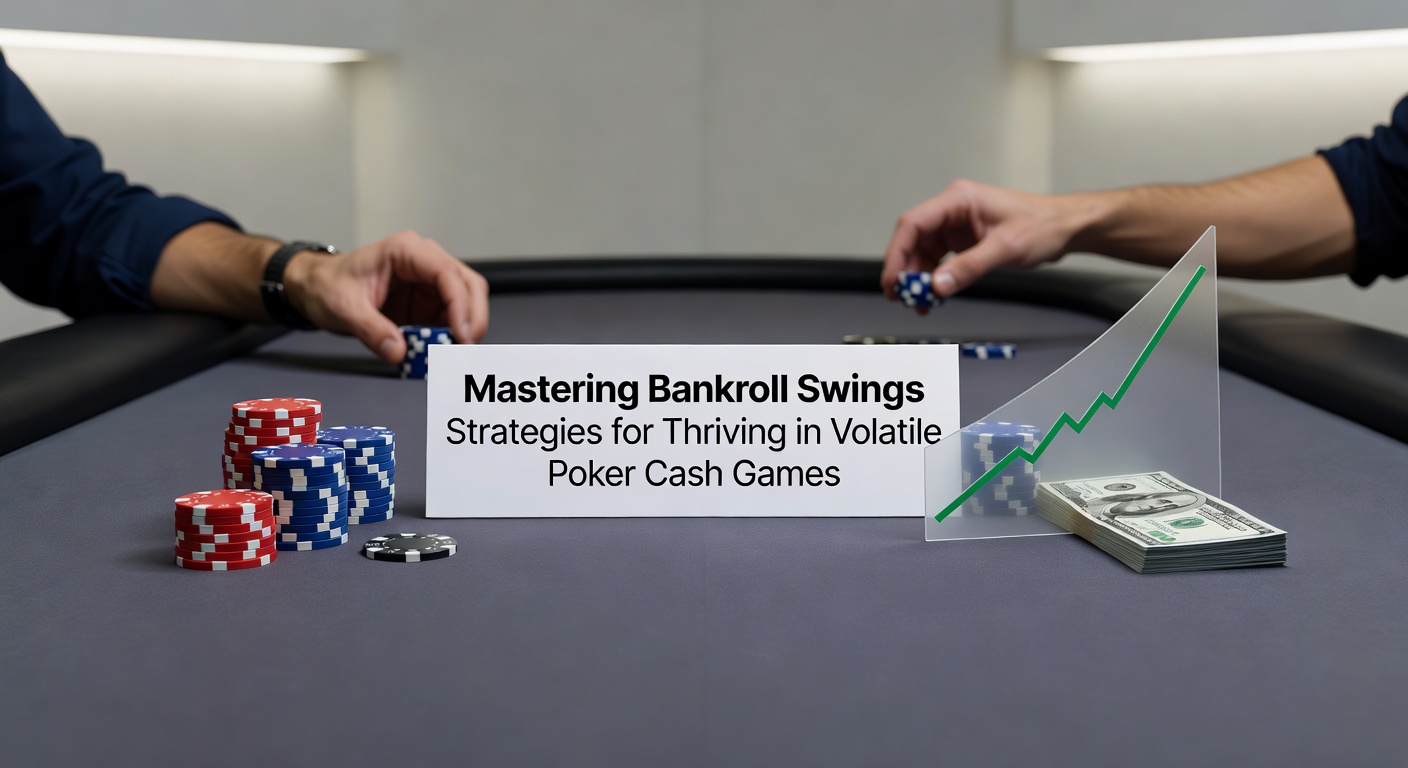
Poker cash games deliver thrills through their constant action, yet they pack a punch with brutal swings that test even seasoned players; those dives can wipe out stacks built over weeks in a single bad night, while upswings reward patience with rapid climbs. Data from tracking software reveals that in no-limit hold'em, standard deviation often hits 10-15 buy-ins per 100 hands at mid-stakes, turning solid edges into rollercoasters. Players who grasp this volatility build resilience, turning potential ruin into steady progress over time.
Grasping the Nature of Bankroll Swings in Cash Games
Swings arise from poker's inherent luck factor, where coolers, bad beats, and set-mining disasters cluster unpredictably; experts at Upswing Poker quantify this through simulations showing 20-buy-in downswings occurring in about one out of every five winning careers at 1/2 stakes. Cash games amplify this because players control session length, often riding out variance longer than tournaments demand. And while tournaments offer fixed buy-ins, cash lets opponents spew chips or tighten up, creating feast-or-famine dynamics.
Turns out, short-term results mislead; researchers analyzing millions of hands via PokerTracker databases (though not directly linked here) find win rates stabilizing only after 50,000-100,000 hands, with 70% of pros experiencing at least one 30-buy-in skid annually. Those who've tracked their rolls notice how table selection and rake exacerbate drops, especially online where multi-tabling speeds up the variance hammer.
But here's the thing: understanding distributions helps; normal variance models underestimate poker because of fat tails from hero calls gone wrong or villain suck-outs, so real-world prep demands conservative buffers.
Foundation Strategies: Building a Bulletproof Bankroll
Standard advice calls for 20-30 buy-ins minimum, yet data from high-volume grinders pushes that to 50+ for 100bb games; the Nevada Gaming Control Board's poker revenue reports indirectly highlight this, as surviving players fuel steady casino action amid tourist-driven swings. Players enforce this by setting hard rules, like dropping stakes after hitting five buy-ins lost, then climbing back only on profits.
So, take one grinder who logged 200,000 hands at NL25; during a 40-buy-in downswing, strict adherence to 30-buy-in minimums kept him solvent, whereas peers without buffers reloaded recklessly and busted. Observers note that allocating separate rolls for each stake—say, 40 buy-ins at NL10, another at NL25—prevents bleed-over, smoothing the path upward.
What's interesting lies in stop-loss limits; pros cap sessions at three buy-ins down, quitting while stacks remain playable, which simulations confirm cuts max drawdown by 25%. And since cash games allow anytime exits, this tactic shines brighter than in tourneys.

Advanced Tactics: Shot-Taking and Dynamic Adjustments
Experienced players dip into higher stakes occasionally with "shot-taking," risking one buy-in at NL50 after banking 50 at NL25, then retreating fully on loss; studies from poker equity tools show this boosts long-term EV by 5-10% for skilled edges, provided shots stay under 2% of total roll. Yet discipline reigns supreme, as data indicates 80% of shot-takers profit only by strict pullback rules.
Dynamic scaling adds layers; during upswings, bump buy-ins to 150bb for value, but contract to 50bb on tilts or leaks detected via HUD stats. Tools like Hold'em Manager crunch numbers in real-time, alerting when variance exceeds two standard deviations, prompting stake reviews. People who've integrated this often discover recovery accelerates, turning six-month slumps into two-month rebounds.
Table dynamics shift everything too; soft evening games online versus shark-filled afternoons demand roll splits, with trackers revealing 15% higher win rates from selective play. And in live settings, like Las Vegas rooms where April 2026's spring series—tied to WSOP satellites—draw recreational fish amid pro influxes, adapting buy-ins hourly becomes crucial.
Tracking and Mental Tools for Long-Term Survival
Software reigns as the unsung hero; PokerTracker and Hand2Note graph equity realization versus results, exposing when bad luck—not skill—drives drops, with users reporting 30% better adherence to plans post-review. Figures from aggregated databases show top 10% win rates hover at 5-8bb/100, but only trackers reveal if swings align with norms.
Mental frameworks complement this; visualization of variance curves, drawn from Canadian Centre for Responsible Gambling insights on decision-making under uncertainty, helps pros detach emotions, treating downswings as tuition paid for edges. One case involved a mid-stakes live player who, after a 60-buy-in crash in 2025, journaled every session; six months later, steady climbs recouped losses plus 20% extra.
Community forums buzz with shared graphs too, where peers benchmark swings—say, NL100 grinders averaging 25-buy-in max drops—fostering realistic expectations. Yet isolation bites hard; those skipping reviews chase ghosts, amplifying tilts.
Real-World Case Studies: Lessons from the Trenches
Consider Doug Polk's public bankroll journey, documented in early vlogs; a massive downswing at high stakes tested his 100-buy-in buffer, but methodical stake drops and content grinding rebuilt it exponentially. Data from his challenges shows variance peaking at 50 buy-ins over 10,000 hands, underscoring multi-stream income's role in weathering storms.
Online, a pseudonymous "VarianceKing" on tracking sites shared a 2024 log: NL200 sessions yielded a 45-buy-in plunge despite 12bb/100 true win rate, recovered via NL50 demotion and 20,000-hand rebuild. Experts dissect such logs, noting how rakeback—often 20-30% of gross—cushions blows, especially in EU rooms compliant with Malta Gaming Authority standards.
And heading into April 2026, as online series like GG Poker's Super MILLION$ ramp up with cash game feeders, players report heightened volatility from satellite qualifiers spewing stacks; those with oversized rolls thrive, cashing deep while others shatter.
Conclusion
Mastering swings boils down to math-backed rules, relentless tracking, and adaptive play; data consistently shows disciplined bankrollers outlast the field, converting variance into variance-beating careers. Players embracing 50-buy-in minimums, shot protocols, and software insights navigate volatility like pros, emerging stronger from every trough. The game's writing stays on the wall: swings never vanish, but strategies turn them into mere bumps on the road to sustained wins.