How AI-Driven Risk Models Are Redefining Fraud Prevention Protocols in International Digital Wagering Networks
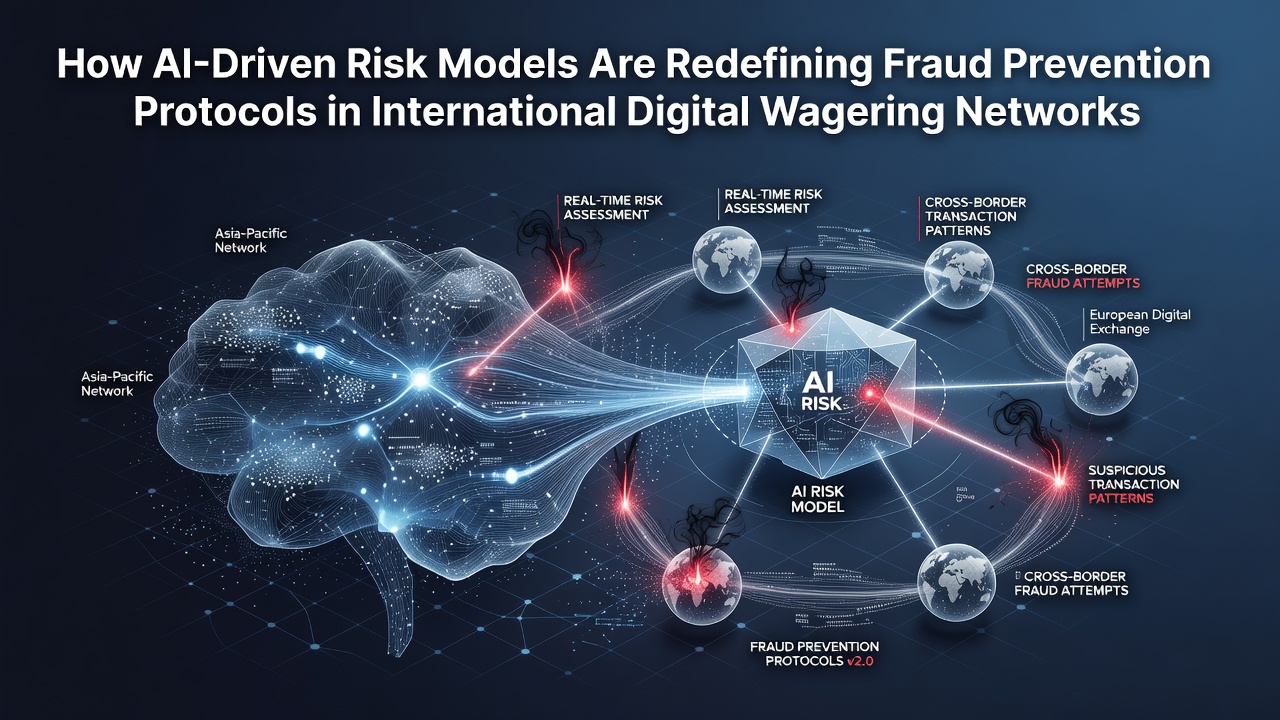
International digital wagering networks process millions of transactions daily across borders, and AI-driven risk models now scan these flows for fraud indicators in milliseconds rather than relying on manual reviews or static rule sets. Traditional protocols depended on fixed thresholds for bet amounts or account activity, yet machine learning systems adapt continuously to emerging patterns while incorporating data from multiple jurisdictions simultaneously.
Core Components of AI Risk Models in Wagering
Supervised learning algorithms train on historical fraud cases to classify new transactions, while unsupervised models detect outliers without prior labels, and reinforcement learning refines decisions based on outcomes from flagged activities. These layers operate together to score risk in real time, pulling inputs such as device fingerprints, IP geolocation, payment velocity, and behavioral biometrics like typing speed or navigation paths. Observers note that integration with graph databases allows systems to map connections between accounts, revealing coordinated networks that single-transaction checks would miss.
Researchers at institutions focused on computational finance have documented how these models reduce false positives by up to 40 percent compared with legacy systems, freeing compliance teams to investigate higher-priority alerts. Data from European operators shows that AI flagged suspicious multi-account patterns during major sporting events in early 2026, enabling preemptive account restrictions before funds moved across borders.
Real-Time Adaptation Across Jurisdictions
Global wagering platforms must reconcile differing regulatory requirements, from strict licensing in certain Australian states to more open frameworks in parts of Latin America. AI models incorporate jurisdiction-specific rules as dynamic parameters, adjusting detection sensitivity when a user crosses virtual boundaries or when a tournament draws participants from high-risk regions. This capability proved relevant in June 2026 when several networks reported coordinated attempts to exploit regulatory gaps during the FIFA World Cup qualifiers, with models automatically elevating scrutiny on accounts showing rapid location shifts.
Integration with Payment and Identity Verification
Payment processors feed transaction metadata directly into the risk engines, allowing correlation between deposit methods and withdrawal requests that deviate from established user profiles. Identity verification vendors supply document authenticity scores, and these feed into ensemble models that weigh multiple signals before approving or blocking actions. One documented case involved a cluster of accounts using similar document templates across several countries, which graph-based analysis connected within hours rather than days.

Industry Data and Regulatory Responses
Figures released by the American Gaming Association in mid-2026 indicated that operators adopting advanced AI protocols experienced a 25 percent drop in chargeback rates over the prior twelve months. Similar trends appear in reports from the Canadian Gaming Association, where cross-border sportsbooks shared anonymized fraud signals through industry consortia to strengthen collective defenses. Academic studies published through the University of Nevada's gaming research center have examined how these shared datasets improve model accuracy without compromising individual operator confidentiality.
Yet implementation varies, with smaller platforms often relying on third-party AI vendors while larger networks maintain proprietary systems trained on proprietary datasets. Regulatory bodies in multiple regions now require operators to demonstrate that their risk models undergo regular independent audits, ensuring transparency around decision logic and bias mitigation.
Future Trajectories for AI in Wagering Security
Developments in federated learning allow models to improve across networks without centralizing sensitive player data, addressing privacy concerns that arise under laws such as the EU's GDPR. Natural language processing components are beginning to analyze customer support interactions for scripted fraud attempts, adding another detection layer. As quantum computing capabilities advance, encryption methods protecting these models will also evolve to maintain integrity against new attack vectors.
Conclusion
AI-driven risk models continue to shift fraud prevention from reactive thresholds toward proactive, adaptive systems that operate at the scale and speed of international digital wagering. Evidence from operator reports and regulatory filings demonstrates measurable reductions in successful fraud attempts, while collaborative data-sharing frameworks strengthen defenses across borders. Ongoing refinements in machine learning techniques and regulatory expectations will shape how these protocols evolve through the remainder of 2026 and beyond.