Blockchain Verification Protocols Reshaping Dispute Resolutions in Cross-Border Virtual Sports Outcomes
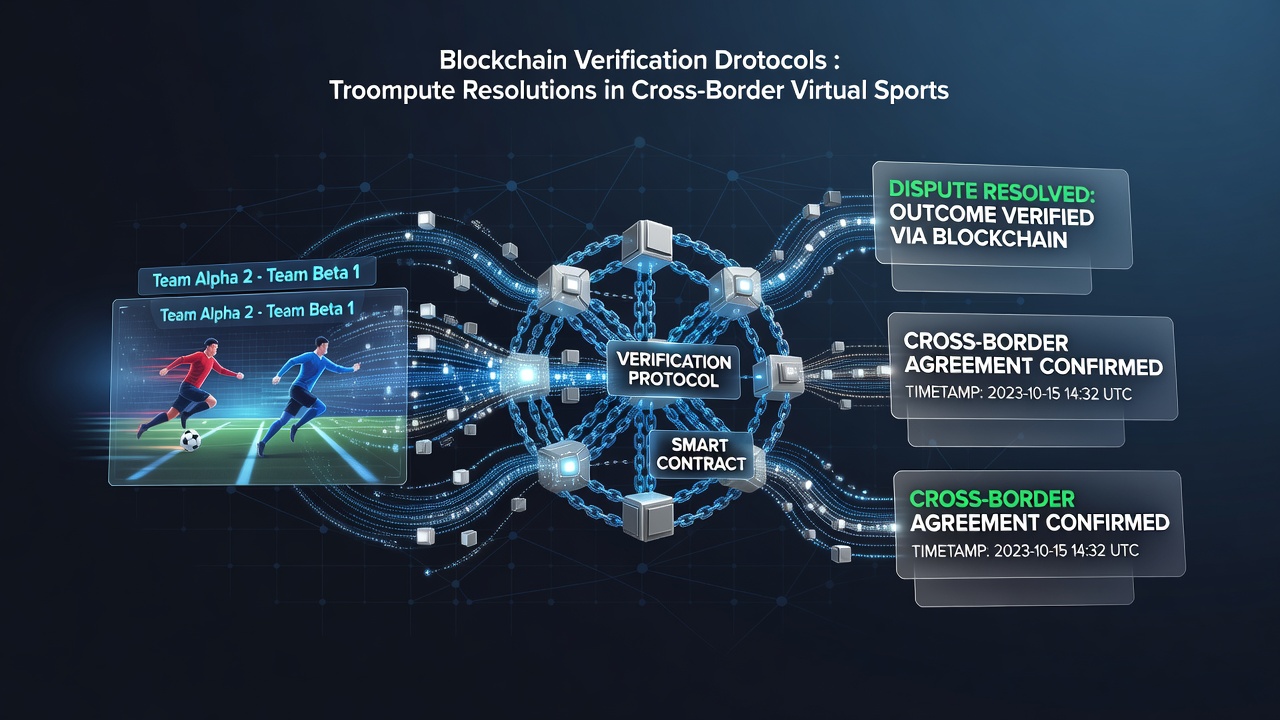
Blockchain verification protocols have started to alter dispute resolution processes in cross-border virtual sports outcomes by creating tamper-resistant ledgers that record every bet placement, outcome calculation, and payout decision. Virtual sports platforms operate across multiple jurisdictions where traditional legal systems often clash over jurisdiction and evidence standards, yet these protocols supply a shared source of truth that all parties can reference without relying on centralized authorities.
Smart contracts embedded in these systems execute automatically when predefined conditions occur such as a virtual race finish or simulated match result, and the code itself becomes the arbiter rather than human operators who might face conflicting national regulations. Research from the Bank of Canada indicates that distributed ledger entries reduce the average time required to settle cross-border claims from weeks to hours because every participant accesses the same chronological sequence of events.
Core Mechanisms Driving Verification
Consensus algorithms like proof-of-stake or delegated Byzantine fault tolerance confirm each transaction block before it joins the chain, which means that once data enters the ledger it cannot be altered retroactively without detection by the network. In virtual sports betting this matters because outcomes derive from algorithmic simulations rather than physical events, and any discrepancy in data feeds or random number generators can trigger disputes between operators located in different countries. Observers note that cryptographic hashing ties each block to its predecessor so that attempts to rewrite history become computationally expensive and immediately visible to auditors.
Multi-signature requirements further strengthen the process because major payout decisions need approval from several independent nodes distributed across regions, preventing any single entity from unilaterally overriding results. Those who have examined implementations in Asia-Pacific markets report that these layered verifications cut down on chargeback requests by providing regulators with transparent audit trails that satisfy both data protection rules and financial oversight standards.
Application to Cross-Border Virtual Sports
Virtual sports events such as algorithmically generated football matches or horse races occur continuously and attract participants from dozens of countries simultaneously, which creates situations where a disputed outcome might fall under conflicting gambling statutes. Blockchain protocols address this by timestamping every wager and corresponding simulation seed in a publicly verifiable manner, allowing participants to check whether the random number generation followed the rules encoded at the moment the bet closed. Data from industry reports compiled in early 2026 shows rising adoption rates among platforms serving European and North American users because the immutable record satisfies demands from multiple regulatory bodies without requiring repeated data transfers.

July 2026 saw several platforms integrate oracles that pull verified simulation results directly into smart contracts, eliminating the previous need for manual verification teams that operated in different time zones and sometimes introduced delays. This integration means that when a virtual tennis match ends, the outcome data flows straight from the simulation engine into the blockchain where it triggers the appropriate fund transfers or holds them for review if anomalies appear.
Reducing Friction in International Disputes
Traditional dispute resolution often requires players to navigate separate complaint processes in each country where an operator holds a license, yet blockchain systems consolidate evidence in one location that courts or arbitration panels in any jurisdiction can examine. According to a collaborative study published by researchers at the University of Melbourne, platforms using these protocols experienced a measurable drop in unresolved cross-border claims during the first half of 2026 because the ledger entries serve as admissible records under emerging digital evidence guidelines in both Australia and Singapore. Operators gain the ability to demonstrate compliance without transferring sensitive user data across borders, which aligns with varying privacy regulations while still satisfying anti-money laundering checks.
Arbitration bodies have begun accepting blockchain-derived reports as primary evidence, and this shift accelerates settlements because the data carries cryptographic proof of its origin and sequence. Those involved in high-volume virtual sports markets observe that the reduction in manual evidence gathering frees resources for other compliance tasks, and the transparency discourages frivolous claims since every participant can independently verify the chain of events.
Developments Observed Through Mid-2026
By July 2026 several virtual sports providers had formed consortia to standardize data formats for simulation inputs and payout triggers, which allows different blockchain networks to interoperate when resolving disputes that span multiple platforms. These standards emerged after pilot programs demonstrated that incompatible ledgers sometimes recreated the very jurisdictional conflicts the technology aimed to solve. Regulatory sandboxes in Canada and the European Union tested these unified protocols and documented improvements in settlement speed along with consistent application of consumer protection rules across borders.
Network participants continue to refine oracle reliability and consensus speed to handle teh high transaction volumes typical of live virtual events, yet the core verification layer remains stable enough to support real-time dispute flagging. Figures released by regional gaming associations reveal that platforms adopting these measures report fewer escalations to external regulators, which suggests the systems effectively internalize resolution processes that once required lengthy legal correspondence.
Conclusion
Blockchain verification protocols continue to supply verifiable records that streamline dispute handling in cross-border virtual sports outcomes by replacing fragmented evidence trails with unified, tamper-evident ledgers. The combination of smart contracts, consensus mechanisms, and standardized oracles enables automatic execution and transparent auditing that satisfies multiple regulatory frameworks simultaneously. As adoption expands through 2026, these systems demonstrate measurable effects on settlement times and claim volumes while maintaining compliance across jurisdictions.